How To Become a Professional Facialist?

A facialist is a skincare professional who specialises in facial treatments. Unlike a general beauty therapist, whose day might move between waxing, nails, and makeup, a facialist spends their time focused almost entirely on the skin. They assess a client’s skin type and condition, identify concerns like dehydration, sensitivity, pigmentation, or congestion, and then deliver a treatment plan designed to improve skin health over time.
That treatment plan might include:
-
Deep cleansing and skin analysis
-
Exfoliation and extraction
-
Facial massage techniques
-
Tailor-made masque application
-
Electrotherapy treatments using specialist machines
Facialists work in a range of settings, and the career is far more varied than many people assume. The most common settings include:
-
High-end salons and day spas, where clients visit regularly for both relaxation and skin maintenance
-
Medical aesthetic clinics and dermatology practices, where the role sits closer to clinical skincare and involves technologies like laser, IPL, chemical peels, and microneedling
-
Freelance and self-employed work, whether renting a treatment room, offering mobile services, or building a home-based business
-
Beauty counters and skincare retail, where professional training allows you to consult with genuine authority rather than reading from a product card
The career appeals to people who want to work closely with clients, who enjoy the science of skin as much as the ritual of touch, and who value a role that blends technical skill with genuine human connection. It is a profession where your reputation is built treatment by treatment, client by client.
What Qualifications Do You Need to Become a Facialist?
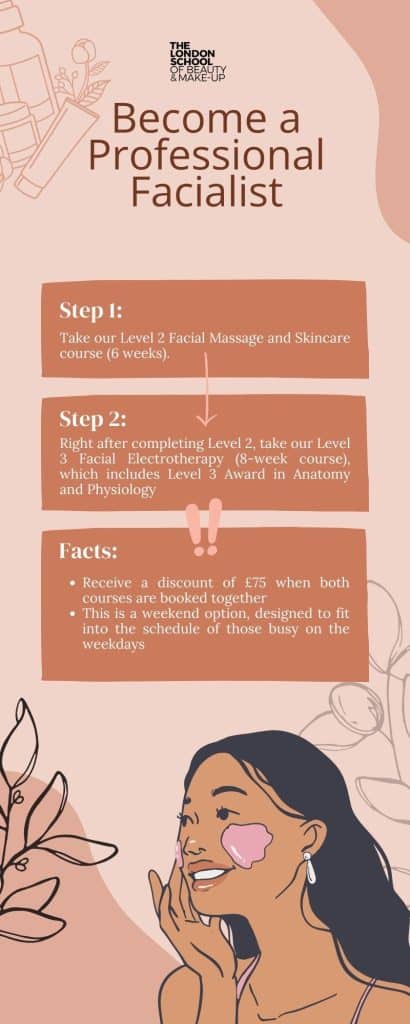
You do not need a university degree to become a facialist, but you do need recognised, accredited training. Most professional facialists begin with a Level 2 qualification in facial massage and skincare, which provides the essential practical foundation. From there, many go on to complete a Level 3 qualification in facial electrotherapy, which introduces the electrical techniques that separate a basic facial from an advanced, results-driven treatment.
1 – Level 2 Facial Massage & Skincare Course
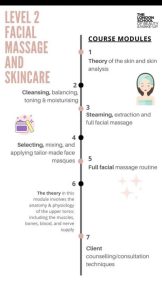
At London School of Beauty, the most common route into a facialist career begins with the Level 2 Facial Massage and Skincare course. Here are the key details:
-
Part-time, one day per week (Saturdays) for six weeks
-
Designed for complete beginners with no prior experience needed
-
Covers hands-on facials including cleansing, steaming, exfoliation, and moisturising
-
Teaches you to select, mix, and apply tailor-made face masques
-
Includes client consultation and skin analysis training
-
Covers anatomy and physiology of the upper torso: muscles, bones, blood supply, and nerve supply
-
Earns you a VTCT Level 2 Certificate in Facial Massage and Skin Care
2 – Level 3 Facial Electrotherapy + Level 3 Award in Anatomical and Physiological Knowledge of Body Systems
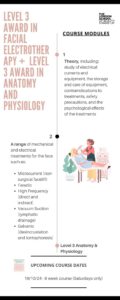
The natural next step is the VTCT Level 3 Award in Facial Electrotherapy, taken alongside a Level 3 Award in Anatomical and Physiological Knowledge of Body Systems. Here is what you need to know about this course:
-
Part-time, one day per week (Saturdays) for eight weeks
-
Builds directly on the knowledge gained at Level 2
-
Covers five electrotherapy machines: microcurrent for non-surgical lifting, galvanic for deep cleansing and product penetration, high frequency for antibacterial and healing effects, vacuum suction for lymphatic drainage, and faradic for muscle toning
-
These are the treatments clients increasingly seek out and that allow you to charge more for your time
-
You leave with two additional VTCT certificates that strengthen both your CV and your clinical understanding
-
After finishing, you can progress straight on to Level 4 Laser training
Some students prefer to take both levels together through the Level 2 and 3 Combined Facials and Skin Care course. Here is how that route compares:
-
Includes the Level 3 Award in Anatomy and Physiology within a single streamlined programme
-
Runs two days per week for seven weeks
-
Covers all the manual and electrical techniques in one complete package
-
Book Level 2 and Level 3 together and receive a £75 discount
An alternative route: starting with Beauty Therapy
Not every facialist follows the facial-specific route. Some students prefer to start with a broader beauty therapy qualification and specialise later. London School of Beauty offers several options for this pathway:
-
VTCT Level 2 Beauty Therapy Diploma: a part-time course covering facials, waxing, manicure, pedicure, makeup, and more over 23 weeks. This gives you a wide foundation and lets you explore different treatments before deciding where to focus.
-
VTCT Level 3 Beauty Therapy Diploma: builds on Level 2 with more advanced treatments including body massage, electrical facials, and body electrotherapy.
-
Level 2 and 3 Combined Beauty Therapy Diploma: a streamlined 23-week programme that takes you from beginner to advanced therapist in one course.
Many qualified beauty therapists go on to take the Level 3 Facial Electrotherapy course separately to deepen their facial skills and add electrical treatments to their offering. If you are unsure whether you want to be a specialist facialist or a broader beauty therapist from the start, the beauty therapy route keeps your options open while still giving you a solid foundation in facial treatments.
How Long Does Becoming A Facialist Takes?
The timeline depends on which route you choose.
-
Level 2 Facial followed by Level 3 Facial: fourteen weeks of part-time study in total, spread across two separate courses
-
Combined Level 2 and 3 Facials & Skincare programme: seven weeks of more intensive study, training two days per week
Either way, the path from complete beginner to qualified facialist with both manual and electrical treatment skills is measured in weeks and months rather than years. This is one of the reasons the career is accessible to people changing direction or returning to education after a break.
What Can You Do After Qualifying?
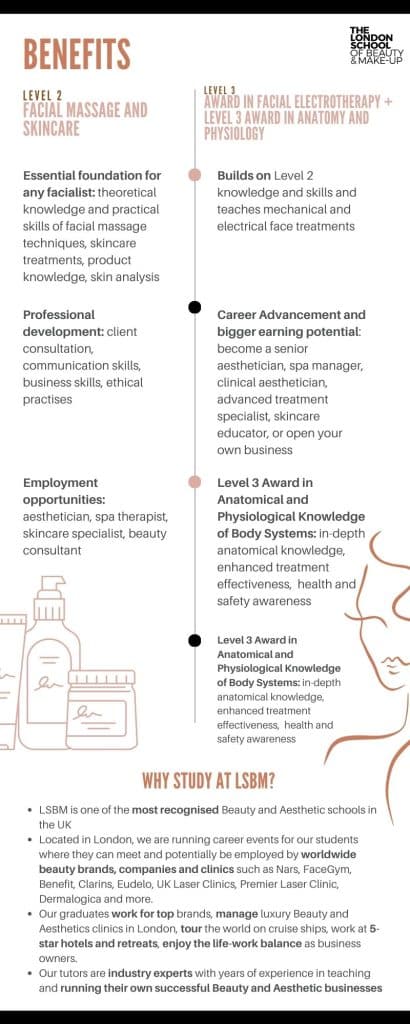
Once you hold your Level 2 and Level 3 qualifications, several paths open up:
-
Salon and spa employment, where you build experience, confidence, and a regular client base under the guidance of senior therapists
-
Clinical or medical aesthetic settings, particularly if you go on to complete a Level 4 qualification in laser and IPL treatments. London School of Beauty offers a VTCT Level 4 Certificate in Laser and IPL Treatments, an intensive five-day course that qualifies you to perform laser hair removal and skin rejuvenation
-
Freelance and self-employed work, renting a chair or room, offering mobile treatments, or building a home-based business. This route gives you control over your schedule and your pricing
-
Skincare education and brand representation, where your hands-on training gives you a level of credibility that a purely sales-based background cannot match
What Skills Will You Develop?
Training as a facialist teaches you far more than a sequence of treatment steps. By the time you qualify, you will have developed:
-
Skin analysis and consultation skills: learning to read a client’s skin, ask the right questions, and adapt your approach based on what you find rather than what you expected
-
Touch sensitivity through facial massage, one of the most valued skills in the profession and something that can only be refined through practice
-
Technical competence with electrical devices, understanding not just how to operate them but when to use them, when to avoid them, and how to explain their benefits to a client in plain English
-
Anatomy and physiology knowledge that turns a facial from a pampering treatment into a clinically informed intervention
-
Professional confidence that comes from treating real clients, making decisions under the guidance of experienced tutors, and seeing the results of your work
Why Train at London School of Beauty?
London School of Beauty is one of the most recognised beauty and aesthetics training providers in the UK. Here is what sets us apart:
-
Brand and employer partnerships with NARS, FaceGym, Eudelo, UK Laser Clinics, Premier Laser Clinic, and Dermalogica
-
Networking events and brand exposure that help you connect with professionals already working in the field
-
Experienced tutors who share techniques tested on real clients, not just rehearsed in a training room
-
A motivated, supportive student community
-
Real client experience before you graduate, depending on your course, which is one of the most effective ways to build professional confidence
Frequently Asked Questions
Do I need a qualification to become a facialist?
Yes, most employers and insurers will expect you to hold a recognised qualification. The standard starting point is a Level 2 certificate in facial massage and skincare, which covers the essential practical skills and health and safety knowledge needed to treat clients professionally and safely.
What is the best course to start a career as a facialist?
If you are new to beauty and skincare, the Level 2 Facial Massage and Skincare course is the ideal starting point. It requires no prior experience and gives you the practical foundation to begin treating clients. For those who want to move into more advanced treatments, the Level 3 Facial Electrotherapy course or the combined Level 2 and 3 programme is the next step.
Can I become a facialist without any experience?
Absolutely. The Level 2 Facial Massage and Skincare course is designed for complete beginners. Many of our students start with no prior background and leave with the skills and confidence to begin working professionally within weeks.
How long does it take to become qualified?
-
Level 2 Facial Massage and Skincare: six weeks of part-time study
-
Level 3 Facial Electrotherapy: an additional eight weeks
-
Combined Level 2 and 3 route: seven weeks if you train two days per week
How do I get started as a self-employed facialist?
After qualifying, many graduates begin by:
-
Offering treatments from home or renting a room in a salon
-
Working as a mobile facialist, travelling to clients
-
Starting with friends, family, and introductory offers to build a client base
Your training will have given you the practical skills and insurance eligibility to begin treating clients safely from day one.
What is the difference between a facialist and a beauty therapist?
A beauty therapist typically offers a broader range of treatments including waxing, nails, tinting, and makeup, whereas a facialist specialises specifically in facial skincare treatments. Many professionals start as beauty therapists and later choose to focus more narrowly on facials, while others train specifically as facialists from the beginning.
Can I progress further after becoming a facialist?
Yes. Popular progression routes include:
-
Level 4 Laser and IPL Treatments for hair removal and skin rejuvenation
-
Level 4 Chemical Skin Peeling
-
Level 4 Microneedling
-
Training, education, or brand consultancy roles as your experience grows
Take Your Next Step
If you are ready to explore a career as a facialist, the best place to start is by speaking with our admissions team. They can talk through the course options, help you decide between the individual and combined routes, and confirm upcoming start dates that fit your schedule. There is no pressure and no obligation, just a conversation to help you understand your options and decide whether the timing is right for you.
Contact our admissions team at admissions@beauty-school.co.uk or call 020 3026 7453. You can also browse the individual course pages for more detail on what each qualification covers and what you will be able to do once you have completed it.
Having these qualifications will open a lot of doors. Also, receiving them from LSB – one of the best beauty schools in the UK will increase your chances of getting the job roles you want.